Mould design
Review the part profile, wall thickness, sealing surfaces and any metal insert. Use trial parts to assess the geometry and fit before approving the mould for production.
Explore Mechanical Workshop
Faridabad, India
Mould design, rubber compound development and sample approval for custom components.
We start with your drawing or sample and how the part will work in the assembly. That gives both teams a basis for developing the mould and compound, then agreeing how to evaluate the first samples.
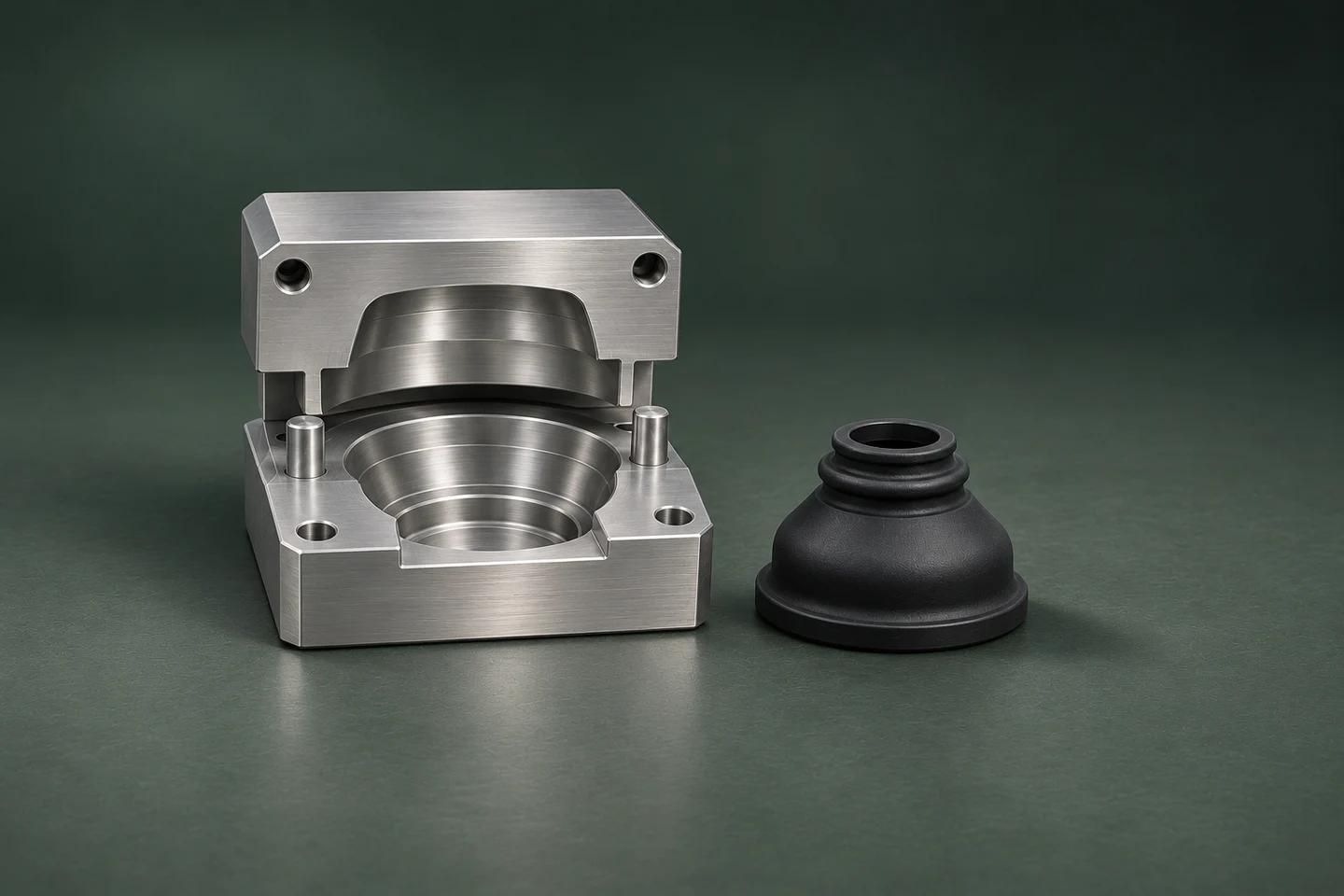
The geometry, material and inspection method need to work together. For a dust cover, that can mean agreeing how the openings fit and where wall thickness is measured before mould trials.
Review the part profile, wall thickness, sealing surfaces and any metal insert. Use trial parts to assess the geometry and fit before approving the mould for production.
Explore Mechanical WorkshopUse the specified polymer or target properties to guide the formulation. Agree which physical or mechanical tests matter for the application and how the results will be assessed.
Explore Rubber CompoundCompare moulded samples with the agreed drawing and specification. Where fit matters, include the mating part or assembly details so both teams can review the same interface.
Explore Quality ControlIdentify the dimensions that affect assembly or sealing. For flexible parts, agree the measuring points and whether the part will be checked free or in a fixture.
Specify the Shore A hardness range and any required tensile, elongation or ageing criteria. Include the test standard, conditions and acceptance limits where applicable.
Share the report format, sampling plan or lot identification you need. Agree which records are required for sample approval and which should accompany production orders.
Ask us to confirm ISO 9001:2015 certificate status and scope. Include the documents your team needs for supplier onboarding.
Share your drawing revision, estimated quantity and delivery location along with any sample or inspection requirements.